
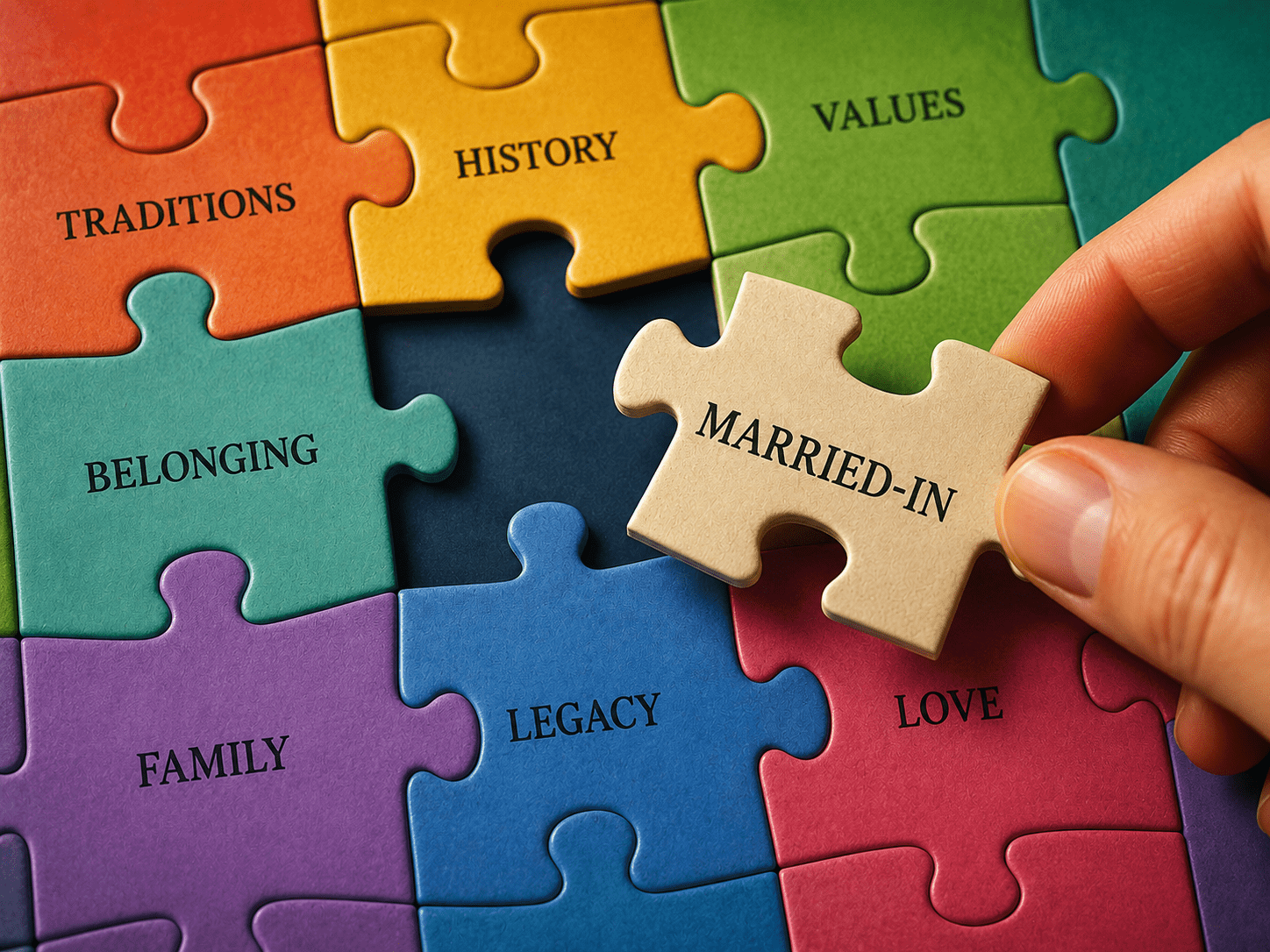
Perhaps the second-most asked question about families relates to the role of married-ins. Are they invited to family meetings? What role should they have?
This is a very passionate issue, and the view of family members is often driven by family culture and emotion rather than logic. But that isn’t a formula for good decision-making.
Let’s break this down and consider the issue through a risk lens.
What are the risks of having married-ins participate in meetings (or more broadly, be part of the family enterprise) or the reasons not to include them?
- Their time as family members is not as permanent as ‘blood’
- Matters discussed at these meetings are considered ‘private’
- They may come from different cultures, which can lead to conflict
Now, what are either the benefits of involving them, or the risks or not doing so?
- They will hear information first-hand rather than second-hand (i.e. via their ‘blood’ partners)
- They have skills and perspective that can make a positive contribution to the family
- Making them feel like outsiders can build resentment
You may agree or disagree with any of the points above, and you may have your own reasons to add.
But no matter what, this constitutes a framework to debate and then reach a rational decision, and hopefully one that includes relevant stakeholders. Therefore, a good family decision.
There are two ways to join a family: birth & marriage, and two ways to leave a family: death and divorce.
Families devote so much time dealing with the complexities of marriage, and preparing for the possibility of divorce. Yet as Jay Hughes points out, every family starts with a marriage between two people who may have been strangers at some point, and who may have come from very different cultures. Further, he notes that married-ins are the only people who choose to join a family.
What’s the right thing to do? That is a trick question (and one I don’t fall for when families ask me).
Sometimes, decisions like this can lead to self-fulfilling negative feedback loops. Exclude a family member (not just married-ins) from discussions, and they can become disenfranchised, which can fracture the family and lead to conflict. That leads to the family wanting to exclude them further, and on we go.
Because this issue has such a strong cultural lens for many families, it’s particularly important for advisors to take a very neutral stance and respect the family’s culture. At the same time, guide them to make an informed choice.
Remember: there is no right or wrong; there are only consequences.
Conversation Starters:
What is your family’s definition of “family”?
What is the family’s experience and narrative around marriage break downs?
Whom do you trust more: your sibling’s partner? Or your partner’s sibling?
Further Readings:
How Changes In The Family Can Benefit—Not Harm—The Family Business
Love, marriage and prenups: The role of family dynamics in growing families
Here’s Why The Successful Family Business Needs An Outsider

