
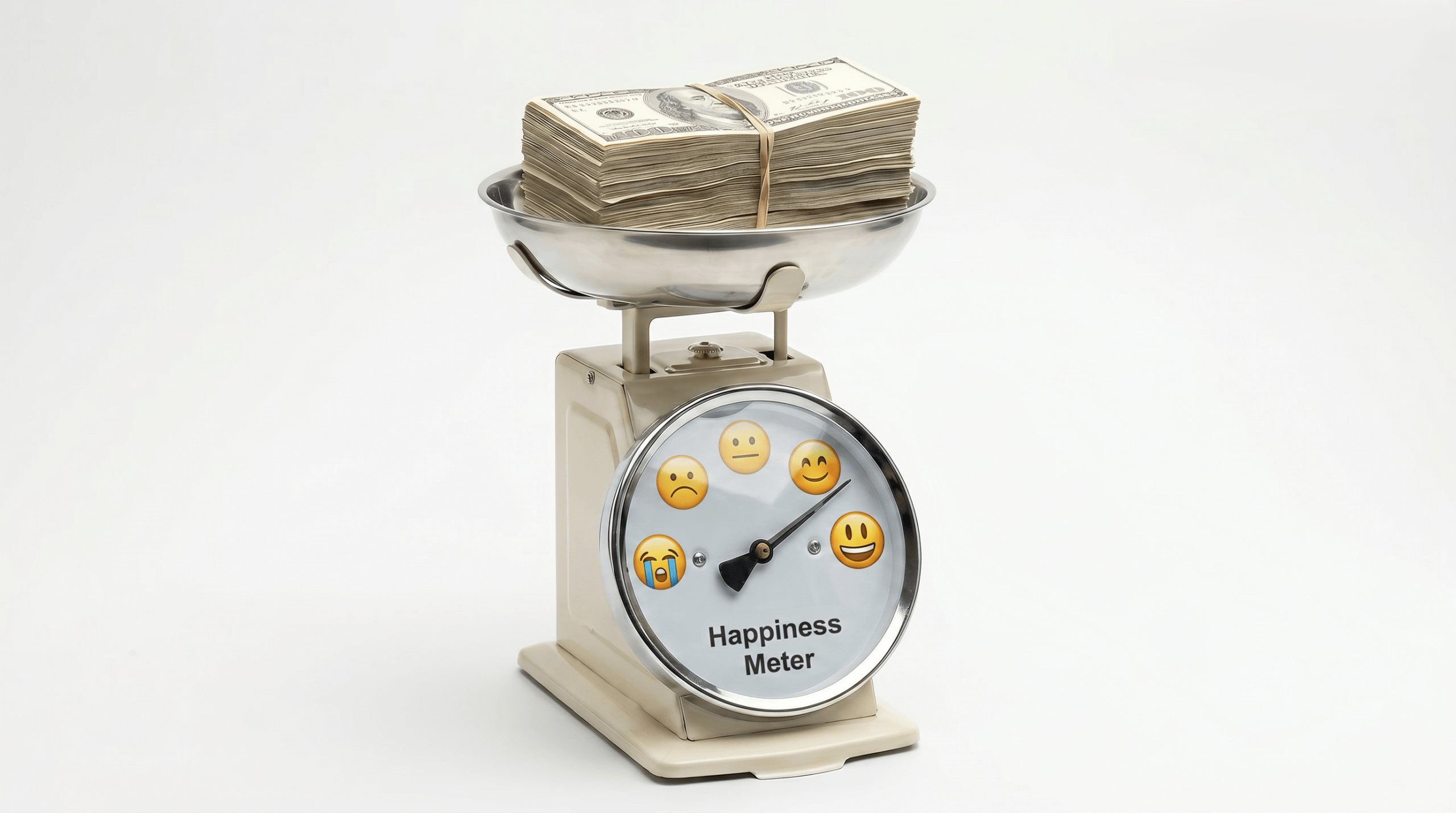
Wealth doesn’t make people happy. And in other breaking news, gravity causes objects to fall to the ground.
A New York Magazine article – “What Does Extreme Wealth Do to the Brain?” – is an interesting study as it interviews both wealth creators and inheritors to understand how wealth affects them.
Recently catching up with a friend who raises capital for venture funds and is a venture partner in some funds, I asked why he does this: he loves being involved in the latest and most dynamic innovations.
I reflected that my work with families is the opposite – the oldest and most immutable thing that is human nature. The reason history “rhymes rather than repeats” is because people don’t really change. The repeating generational patterns within families are a great example of this.
The perception among people without wealth is that wealth makes people worse. I disagree. If you’re a nice person when you have no money, you will still be a nice person with it, and ditto if you are an a**hole.
In the word-association test I use with families, the word “wealth” is often associated with “freedom” and “choices”.
But for some, this is a double-edged sword.
What makes our brains unhappy is complexity and uncertainty.
The freedom to do absolutely anything can trigger very unpleasant emotions.
While the first-person accounts are diverse and informative, the highlight for me was the interview with Dr Paul Hokemeyer, psychotherapist to very rich people.
He identified eight steps that turn an “ordinary wealthy person” (what exactly is that?) into a monster.
The first two are key: wealth identity, and isolation. Each is worth a long article and I want to focus on the second because it’s the tipping point.
Isolation is about “private [anything]”: clubs, schools, neighbourhoods, planes. And the sycophantic world of “private wealth”, where people are nice to you for purely altruistic reasons … not.
When you live in a bubble, surrounded by people like you and experiencing the world in a completely different way to the other 99.9%, you lose touch with “the real world”.
The value of this insight is that is contains the seeds of the solution. The parents I’ve seen do it well make sure they expose their kids to the outside – often to Third World suffering.
Gratitude is one of the most important things to maintain, and seeing “regular life” sets a baseline and a constant reminder for our blessings, so that they can indeed remain blessings.
This is where active and strategic (not chequebook) philanthropy as a family can be such a powerful tool to help raise kids and live with purpose.
Conversation Starters:
Word-association test: “wealth is …”
How homogeneous and isolated is your life and social circle?
How does your social circle and that of your parents/children differ?
What does a loaf of bread cost?
Further Reading:
8 Simple Ways to Live A Stealth Wealth Lifestyle and Stay Inconspicuous
Billionaire Philanthropists Have Discovered a New Way to Give Away Their Fortunes
What Family Office Leaders Need To Know About Conscious Capitalism
Massive Wealth Transfer, Sunsets And New Models – Philanthropy In Flux
What Does Extreme Wealth Do To The Brain?

